Monday, March 3, 2008

Crying for the Dreamless

I've been an analytical, scientifically thinking and probability based person as long as I can remember. Science has been the basis for many of my decisions. During gymnastics practice I used to calculate the angles and amount of force I needed to apply to my swings on the bars. When I watch contestants on Deal or No Deal I keep track of which cases hold high amounts, because on the basis of probablity two high amounts are unlikely to be next to eachother. As I walk down the street and look at different plants I classify thems as angiosperms or gymnosperms and monocot or dicot. When I take medicine I write out the chemical formula whatever I'm taking and figure out each reaction mechanism so that I precisely which part of my body is receiving the medicine when.

It's absolutely INSANE to live this way.

Every once in a while I just need to escape into a fantastic story. So I read. I remember reading Tolkien's The Hobbit -- long before Orlando Blooom blessed us with his presence. I remember being enchanted by Roald Dahl at the age of seven and wishing that I could be Matilda or have my best friend be The BFG. And yes, I will admit to remembering the very first day I opened the book that told me about a lost boy name Harry and his friends Ron and Hermione. Reading these stories I could allow myself to believe in something, even if only for the moment. There were these fantastical worlds where anything was possible -- and with no evidence to the contrary.


Unfortunately, I also remember the day I found out Charlie and the Chocolate Factory was a political satire and that Tolkien's Lord of the Rings were based off of Chaucer. And within the past few weeks I have read The Faerie Queen, and while reading it I fell in love with the story. A story of beautiful princesses and chivalrous knights fighting the dragons and evil witches. But because I have a logically-indused brain stem I know that is not the intent of the story, so I struggle to continue to believe in such wonderous events. It's sad that people who claim to believe in a merciful, benevolent God kill people who do not believe as they do. It's crap.

RIDDIKULUS!


Perhaps Harper Lee was write when she stated that the greatest way to harm a child is to take away their innocence. I refuse to let mine go. I'm holding onto it for dear life and although I'm a very intelligent girl if I want to forget about the reformation and crazy Queen Bess for an hour or two so I can simply enjoy a great story written by Eddie then I will --- because I think it far more important to believe in something than to be correct.

Ed the Mundane

Edmund Spencer had one goal, and that was to become a great English poet. He didn't write so that he could spread the joy of story making to others, nor did he write so that people thousands of miles away could be educated in the affairs happening in his part of the world. No, Edmund Spenser cared about being praised.


What strikes me as even more interesting is that he constantly wrote to the Elizabethan court asking for a job . . . but he was always turned down . . . such a shame. Somebody please tell me what person is repeatedly denied a job and then turns around and praises those who refused them their dream? Eddie Does!!! Trust me, I really don't think anyone would write out an ungodly long poem for Simon Cowell. What would it even say?


Simon you are the music Rex

how dare I be obsessed-

with all of my lyrical dreams

I have listened to your facetious claims

and know that it is best

For me to lay my passion to rest

Praise Simon! The Faerie King!

The one who knows who can sing!


Um. . . probably not.


Really the only thing that separates Edmund from William Hung --yes, the She Bang guy-- is the fact that Edmund was at least intelligent. His poem admittedly contains great "dark conceit" as he called it, but let's get real. Although he talks about holiness and blah blah blah . . . pride is bad.


Pride was the only thing driving Mr. Spenser to create such a work.


Two of a kind. Edmund Spenser and William Hung.


Sunday, February 24, 2008

Curiosity Killed the Christian


I am the grand-daughter of a Methodist minister. This means I have grown up in the church. And by virtue this means I've attended Sunday School since I could roll-over, I've been in Christmas Pageants since I could be swaddled and I've been praying before every meal since I could say "Amen." A picture of my grandfather (the minister) and my grandmother can be seen above.

Before I continue allow me to say that this post will be somewhat different from anything I've written thus far. That is to say that it will not be pompous, arrogant, sarcastic, or laudatory. What I've learned is that expressing one's feelings about a very serious issue often helps, so here I go.

I've been conflicted for as long as I can remember about religion. As I previously stated I grew up in a church, but I always questioned literally EVERYTHING. In fact, I used to get 'dismissed' from Sunday School class, and one fateful summer I was expelled from Bible Camp. Growing up in Missouri is like growing up in an entirely different nation. We are influenced by both Northern and Southern traditions, but feel our own (Mark Twain, Langston Hughes, Harry S. Truman, Thomas Hart Benton, Walt Disney, etc.) are far superior to any Confederate or Yankee. This means that almost everyone is well versed in the Bible--because in case you didn't know Masuria (May-soo-ray or Missouri) is the land of Native American Gods. All of my friends experienced Confirmations and such, but when I was ten years old I made a decision that would forever cause me inner turmoil. I decided that I would never read the Bible. Why? I felt that a book written by a bunch of men at the Council of Nicaea --where they also ripped parts out-- would in no way answer the many questions that I had. Moreover, if my Grandfather could not answer certain questions, a book would not be of any further assistance. I continued being involved in Sunday School, Christmas Pageants, and prayer but then I graduated. I made the move to Yankee-land (NYC) and my eyes and mind were opened to an entirely new set of principals. I had read about homosexuals, but never seen any. (Yes, I know how awful that sounds.) I had read about Muslims, Jewish people, Asians, and many other ethnicities --but again I had never seen any other race other than white and black.

So what does all of this have to do with Kilgore's assignment on the Common Book of Prayer?

It adds to my uneasiness with religion. Reading this I knew word for world the prayers. I knew what the minister would say and then I knew how the congregation should respond. This bothers me because, again, a group of men sat around and devised this Book of Common Prayer it isn't the word of a divine God, but the writings of mortal men. I trust no one, especially a group of dead men who chose to write a book on religion, but then killed in the name of it.

In closing, I'll say that I love my family and my home. I dare say that my family is the most important thing in my life. I think a Christian should put God first, but I will put my family. There is no group of people that I have more faith in or respect for. This is why I am so conflicted. My family puts all of their faith into a Christian God, and it is the hardest thing in the world to know inside that you may not believe in what they do, and that if they knew how you felt they would forever look at you in a different manner--even if they do not intend to. I don't know if I'm more afraid to not believe, or more afraid to admit the truth to myself.

Here is a link to a Biblical Timeline . . . it's kind of interesting. Enjoy.

Monday, February 18, 2008

Words that Make the World go Round

"Read my lips, no new taxes."
- George H. W. Bush

"We did not--repeat, did not--trade weapons or anything else for hostages, nor will we"
- Ronald Reagan

"I did not have sexual relations with that woman."
- Bill Clinton

"I am not a crook."
- Richard Nixon

"I am . . . to live and die amongst you all."
- Queen Elizabeth I (from her Speech to the Troops at Tilbury)

. . . inspiring words, too bad she doesn't mention till the end that she's sending someone in her stead, and she'll be busy writing to her 'Pug' Wat, while he's out sleeping with her lady in waiting Bess. Watch the famous speeches below . . .


Annry

I refuse to waste my time, energy, and intelligence on writing a true blog for the letters between Henry VIII and Anne Boleyn. The fact that many people find the relationship interesting disgusts me. But what repulses me more is that people who deem themselves 'scholarly' choose to pursue this endeavor as opposed to exploring the literature, history, or art of the time. This says something about our society. Whether it be Britney and K-Fed, Tom-Kat, Brangelina or Billary, people are obsessed with the romantic --and often times sin-lusted--lives of high profile individuals. To those people I say only one thing . . .

Get A Life.

Wednesday, February 6, 2008

Womanocity

It's no secret that women have not been treated fairly over the years. But neither have African-Americans, Asians, Native Americans, Hugenots, Pilgrims, Falun-Gong Practitioners or Jews. When Joan Kelly-Gadol wrote her piece regarding women in the renaissance she based it mostly on Baldesar Castiglione's The Book of the Courtier. This is understandable as her piece is in response to his book. But let us first remember that:


1). his book was a fictional account


2).although women weren't seen as dominating they still were respected


3). there were women renaissance artists


4). some women did have a dominant role


5). a renaissance is a rebirth of antiquity


6). humanism was part of the renaissance.


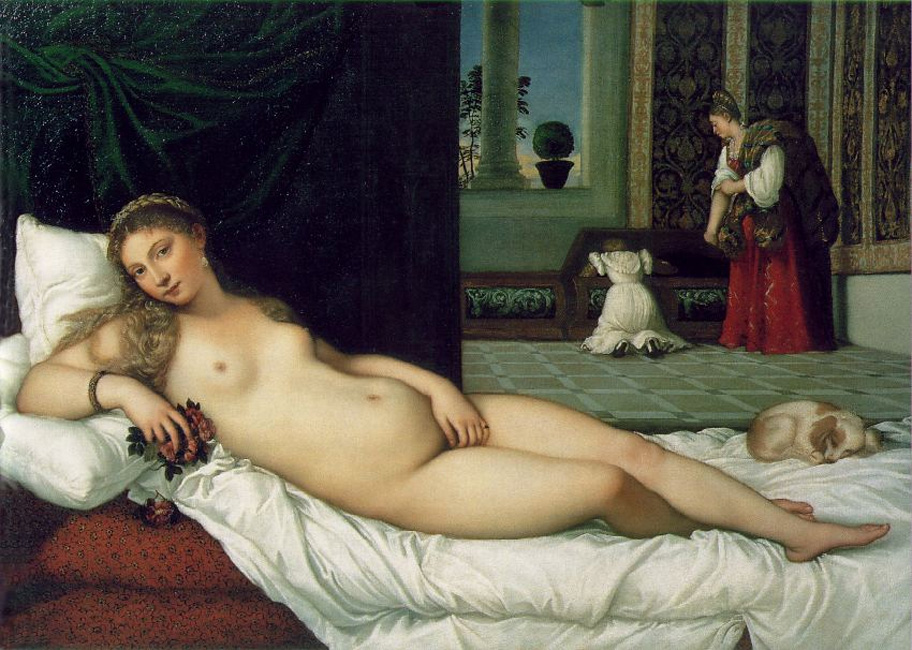
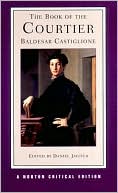
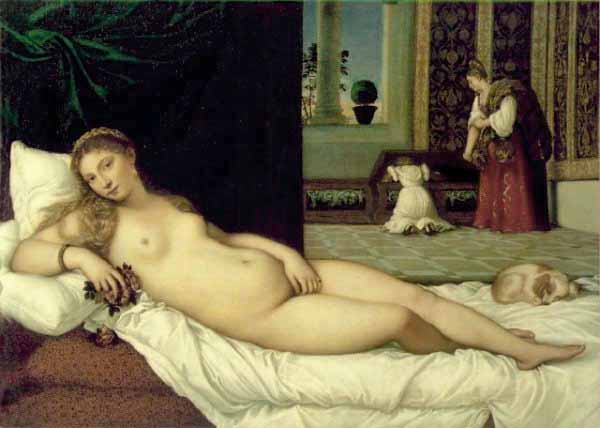
Delving into these facts further it was stated in an earlier class discussion that I felt Castiglione created this 'perfect courtier' solely because he knew a mortal man with these qualities could never exist, along with the fact that the book is pure fiction it goes against common sense to base real life off of an idealized story. Hitting the second point about women being respected even though they weren't seen as dominating factors . . . a woman being repsected at this point in time was a huge step in the right direction. My third point in combating Ms. Gadol's opinion about women in the renaissance is simply that there were women in the renaissance. For instance Artemisia Gentileschi who painted Judith Slaying Holofernes. (The picture is posted above.) On to the next point . . . women such as Elizabeth I, Mary I, Margaret of Austria . . .etc. Further information about women ruling during the Renaissance can be found *Here*. The renaissance was also a rebirth of antiquity. This is seen through virtually every painting made during the time. However women, especially, were paid tribute to by having their bodies modeled after the body of the goddess Venus. Take Titian's Venus of Urbino (which is also the same Urbino the book takes place in . . .picture is to the side) here the woman is made to look like the goddess. My final point is that humanism was part of the renaissance and Gadol conceedes that nobelwomen were in fact taught dance, music, Greek, and Latin, so that they were cultured. Although this is not a very long strenuous argument like that in Castiglione's book . . . it is very true. Based upon the facts that Gadol based her judgement on a fictional book, women were respected, there were women Renaissance artists, some women were dominant, antiquity was rebirthed and then dedicated to women, and women were educated as part of the humanist experience I feel it is only reasonably concluded that women did in fact experience a Renaissance, it may not have been identical to that of a man but it was uniquely theirs.

Monday, February 4, 2008

Keep Suffering


"... and it seemed to me that the greatest pain that I felt was in having to suffer when I had not deserved it."

- Pietro Bembo (pg. 18)


A group of geese is a flock. A lot of lions is a pride and a herd of humans are people. People behave animalistically, and as such their actions tend to be unwarranted, irrational, and somewhat cruel. The proof of this can be seen in high-school classrooms across the nation as different cliques of students prey upon those that are weak. Furthermore, this can be seen in the media, as reporters seek out those that can be unravelled by sensational news. It is the grade school pledge to 'Treat others how you wish to be treated,' yet people continue to lie, cheat, and steal so that they can further themselves. This results in innocent people being hurt. But it happens everyday and rarely does anyone even blink.

People continue to want to believe in the best. So they create these magnificent stories for people to believe in. Stories like Beowulf, King Arthur, and Superman. In The Book of the Courtier intellectuals come together and create a fictional -but perfect- courtier. They do this because they know that one will never exist, yet they hope that this person who has noble blood, an air about them, the ability to create a good impression, a perfect face, good posture, a great body frame, the ability to wrestle, ride a horse, possesses sprezzatura, grace in writing and speaking, is knowledgable, has good judgement, knows the orators and letters of Greece, creates paintings and sculptures, and is a musician will someday grace their presence. The idea that a perfect person may come along and save them from their wretchedness allows people to continue down the path of their personal defilement. Because so long as you think someone else is 'nice' you can be a b----. This is why a person could be genuinely kind, but people will always contain a certain amount of evilness.