Showing posts with label Utopia. Show all posts

Sunday, January 27, 2008

Utopian Life in America


People yearn for opulence. Human beings crave sex. Individuals require power. But it is absolutely essential--and much more important-- for an intellect to think. Renee Des Cartes stated, "I think therefore I am." He did not merely mean that he existed, but that he lived in a capacity where he could reflect and dream. Too often people live their lives on a daily basis. They think about dinner, family, perhaps their future plans. All of these are somewhat of a necessity, however, a lioness also thinks before it attacks its prey, brings that prey back to its pride to feed the others, and anticipates that she will hunt again tomorrow.


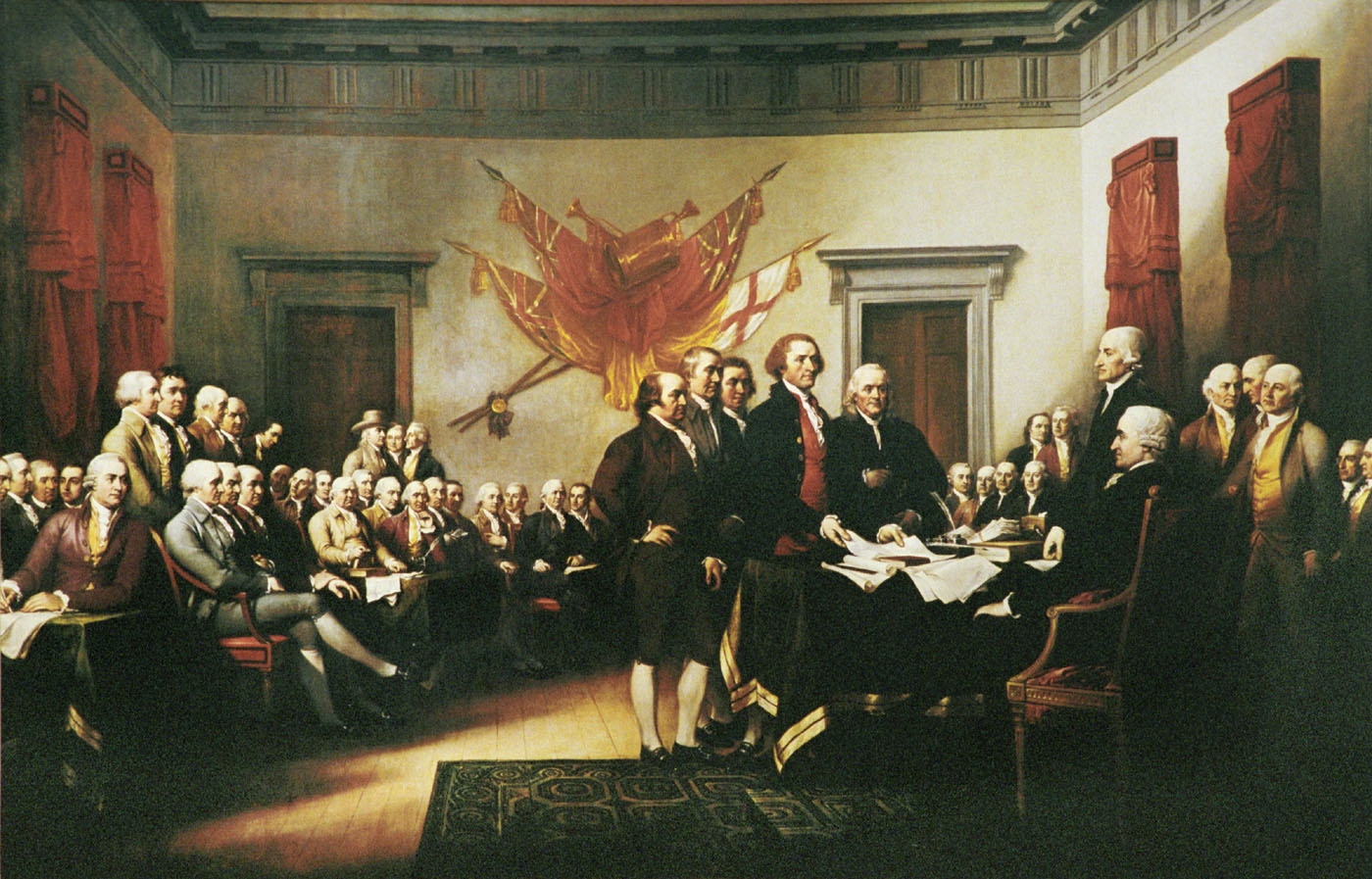
My point is that for us to truly be a homo-sapien or 'man who thinks.' We must do so. It is our duty to believe in something. Thomas More believes in Utopia. Additionally, he made other people believe in the concept of a divinely mortal commonwealth, which for all common purposes would be quite perfect in its simplicity. More's thoughts influenced other Renaissance writers, and a few Renaissance writers influenced the forefathers of our country. These were men with passionate ideals that fought for something more than a better day; they fought for a better world. Many similarities, such as the ideas of a ruler, freedom, and foreign policy, can be seen between our nation, and that of Utopia.


The idea that a governor of a country should be more concerned about the 'common welfare' than his own is taken from More's book, (Pg. 540.) It is also an inherent belief in our country. As well as the idea that the people should choose this man for, 'their own sake, not for his,' (pg. 540.) Moreover, the idea that it should be, 'unlawful for public offices to be solicited, or put up for sale,' (pg. 544,) found its way into our constitution. Additionally, the concept of a republic, where the people could vote for representatives (phylarchs) and senators (head phylarchs) who then make decisions for the people is also one of More's conceptions (pg. 549-550.)


Foreign affairs were also addressed by More. On page 559 Raphael tells the story of the Anemolian ambassadors who wore gold to meet with the Utopians. The lasting impression of this is to understand different cultures. This is why the United States found it prudent to establish embassies throughout the world. More would also help influence one of the cornerstones of United States foreign policy. In George Washington's farewell address he urged the posterity of this nation to avoid foreign entanglements. On page 538, Raphael tries to explain to More why he doesn't wish to be a counselor for a king, he states that, 'Suppose I said the king should leave Italy alone and stay at home, because the single kingdom of France all by itself is almost too much for one man to govern, and the king should not dream of adding others to it?' To add on to those comments More also talks about how the Utopians do not engage in battles unless they are being attacked, or they are aiding one of their allies. This adds to the idea that country's are better off not attacking one another.


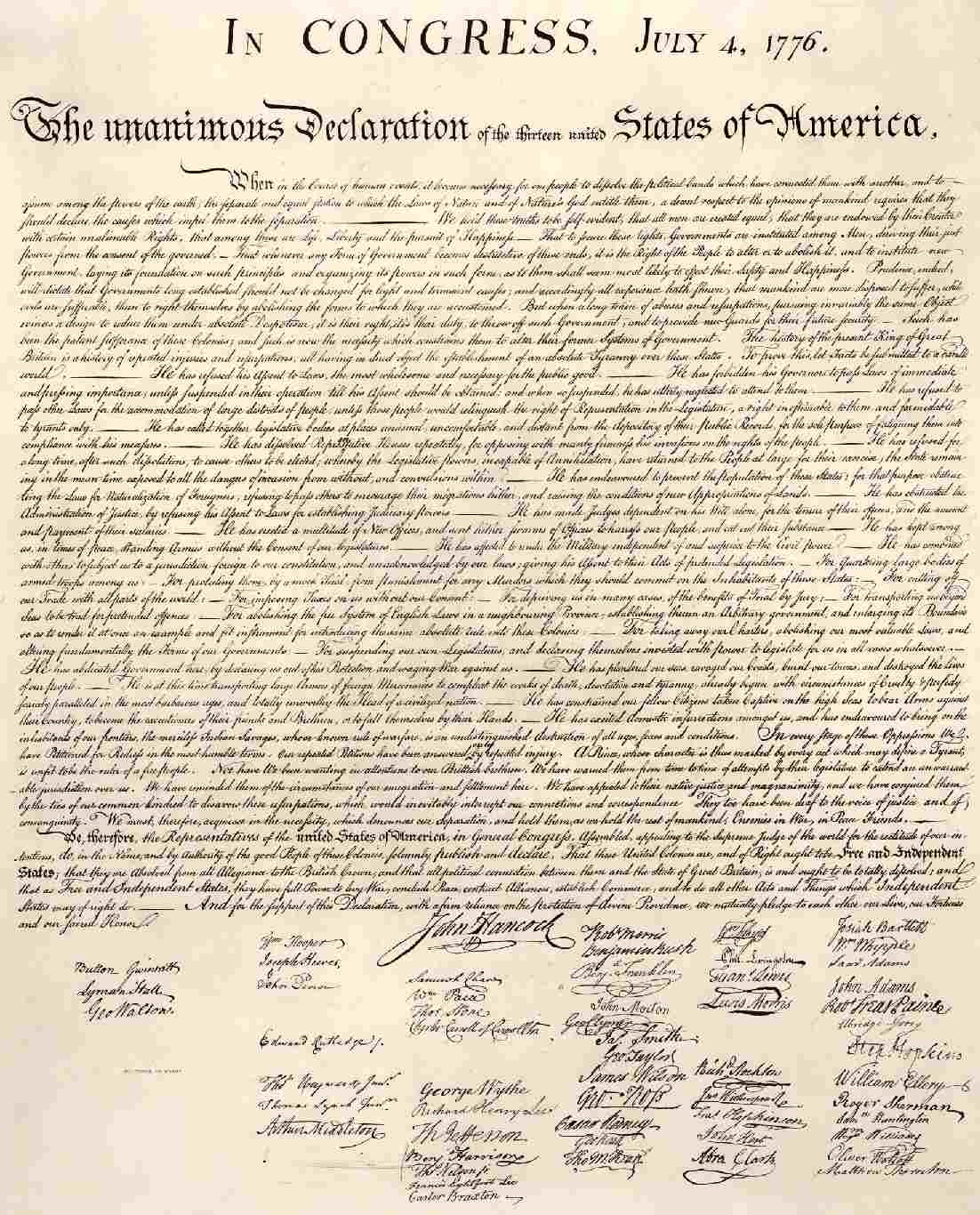
Freedom. It means something different to every person. To me, it means I can stand up and say, "Anyone but Hillary." To others it means that they can stay out until 1 am. But the truth is, freedom means the most to people who don't have it. 'The chief aim of their constitution is that . . . all citizens should be free.' (pg. 553) and 'pleasure, as the goal of our actions.' (pg. 562) These characteristics of a paradise can be found in our Declaration of Independence, "That all men are endowed by their creator certain inalienable rights, that among these, are life, liberty, and the pursuit of happiness." Because we have these rights we have the ability to make of ourselves what we will. More gives a brief description of a man who, 'devotes his leisure so earnestly to study, and makes such progress as a result, that he is relieved of manual labor, and promoted to the class of learned men.' (pg. 552.) So if you used to be a factory worker and you want to work hard to become something else, you can. But what is perhaps the best freedom that we have in this country is what More describes as, '[Citizens] who have not accepted Christianity make no effort to restrain others from it, nor do they criticize new converts to it,' (pg. 580.) This is freedom of religion. In 1516 it must have been a most outlandish and preposterous thought, because when the United States went about it in the eighteenth century it was unspeakable for the rest of the Western world.


I am not suggesting that Thomas More was the sole or even the major influence of the Revolutionaries, merely that he was one. More thought and dreamed of extraordinary concepts. He was not after money, sex, or power--perhaps because he had most of these menial things. He inspired people to believe in something better than what they had. Then he made men that lived over two hundred years after him believe in it and act upon it. That is not living day to day, but it's being the highest form of human, a Utopian.

beLIEve


Religion has always been demagogic. It tends to infect its followers with the disease of fear. The fear of eternal damnation, the fear of suffering, and the fear of being alone; these tumors of terror metastasize in the minds of religious adherents. As a result, more blood has been spilt in the name of religion than any other body of power. A logical inference one could make from this would be, "to end the most amount of senseless killing, religion should be brought to an end or it should be better controlled." The conclusion, therefore, would be that if a large amount of killing were brought to a halt then the world would be more peaceful. In Thomas More's Utopia he speaks of many ways in which to make the world a better place. However, most of the story is a metaphor for correcting the ills in religion entangled with a hope of what religion could mean for people.

More makes a very good argument for pointing out the evils of religion, especially during his time. Raphael talks about the 'sheep' in England. He mentions how they, 'used to be so meek and eat so little,' but now, 'they are greedy and wild,' (pg. 531.) Moving down the paragraph it states that, 'they destroy houses and abolish towns, keeping only the churches, and those for sheep-barns.' This is a conceit on More's part because the congregation is usually what is in the church, but now the churches are sheep-barns, meaning that the congregation are the herd of sheep. Also it is important to note that often in the Bible, Psalms and many religious poems a sheep is usually referring to a religious worshiper. The fact that More feels that the religious leaders are becoming greedy could come from the selling of indulgences, the raising of the amount of tithes a family was ordered to give to the church or many other flaws the church had at the time.

Although More sees some instability within his church, he also talks about what religion can do when practiced in a positive light. More, again through the voice of Raphael, talks about how some seamen had been very grateful to receive a compass because, "they had formerly sailed with great timidity, and only in summer. Now they have such trust in the compass that they no longer fear winter at all, and tend to be overconfident rather than cautious," (Pg. 527.) A compass shows a man his way, here Raphael has helped these men by giving them a compass to find their way. This, again, reminds me of a religious ritual because many believers admit that they were 'once lost, but now they are found.' Also it states that in the summer they felt safe. The summer, when used as a metaphor, corresponds to daylight/happiness/the living part of a person's life. However, in the winter people were afraid. Winter as a metaphor generally means death/loneliness/loss. Therefore I take this to mean that people were just fine when everything in their life was going well, however once things become difficult they lose there way, but now because they have a compass (or God's assistance) they can find their way and no longer need to live in fear. Again, More is trying to show how religion and belief in God can help people.

While More is talking about the current problems with religion and the good it can do, he also talks about the type of man that people would be if they lived the 'Utopian' lifestyle. More does this through two ways: highlighting the characteristics of the main characters and mentioning people that he respects. The main characters that are described are Raphael Hythloday and Peter Giles. Raphael is mentioned to be somewhat like Plato, obviously a very powerful, respected, and influential figure (pg. 525.) He is also known to have knowledge of various countries and good advice, (Pg. 527.) Moreover, in connection with the religious undertone Raphael was the name of an archangel who was once disguised as a human traveller and then saved his son's wife from evil, by showing her the way to God. This follows in conjunction with Raphael being a 'sailor' (traveller) and giving the compass to man who had lost their way. The other main character of Peter Giles. This name has two religious implications the first of Peter the Apostle and the second, St. Giles. Peter the Apostle, of course who was also St. Peter and is who the Papacy is founded in, and who is an example to how all humans should act. St. Giles was one of fourteen holy helpers and hospitals, houses for the poor and crippled were built in his name across England and Scotland. More describes Peter Giles as a man of 'high reputation', good character, 'cultured, virtuous, courteous', 'trustworthy, ' 'loyal,' and with whom he can have a 'pleasant talk,' (Pg. 524-525.) As More describes these men he also talks about men whom he respects, such as the type of man who would desire to visit Utopia would be , 'a devout man and a professor of theology . . .not motivated by any means of idle curiosity, but rather a desire to foster and further the growth of our religion. ' This is yet, another conceit by More that his Utopia is about perfecting religion, (Pg. 523.) Moreover, there is talk that there should not be any private land and that it should be given to the people. This could be in reference to the fact that the Church had the biggest land claims across Europe, and that the followers deserved to have a place that they could call their own.
In the end, it is immensely obvious that More sees the demagoguery growing in religion. He wants it removed so that not another healthy person falls ill to this spiritual sarcoma. Without holy defilement he can have a healthy society and that is the best way in which for him, or any of us, to reach our Utopia.